Christmas Hills Landcare Group
Home


Supporting projects
The Christmas Hills Landcare Group undertakes special projects to support landholder efforts to care for the environmental values on their land and in the Christmas Hills area.
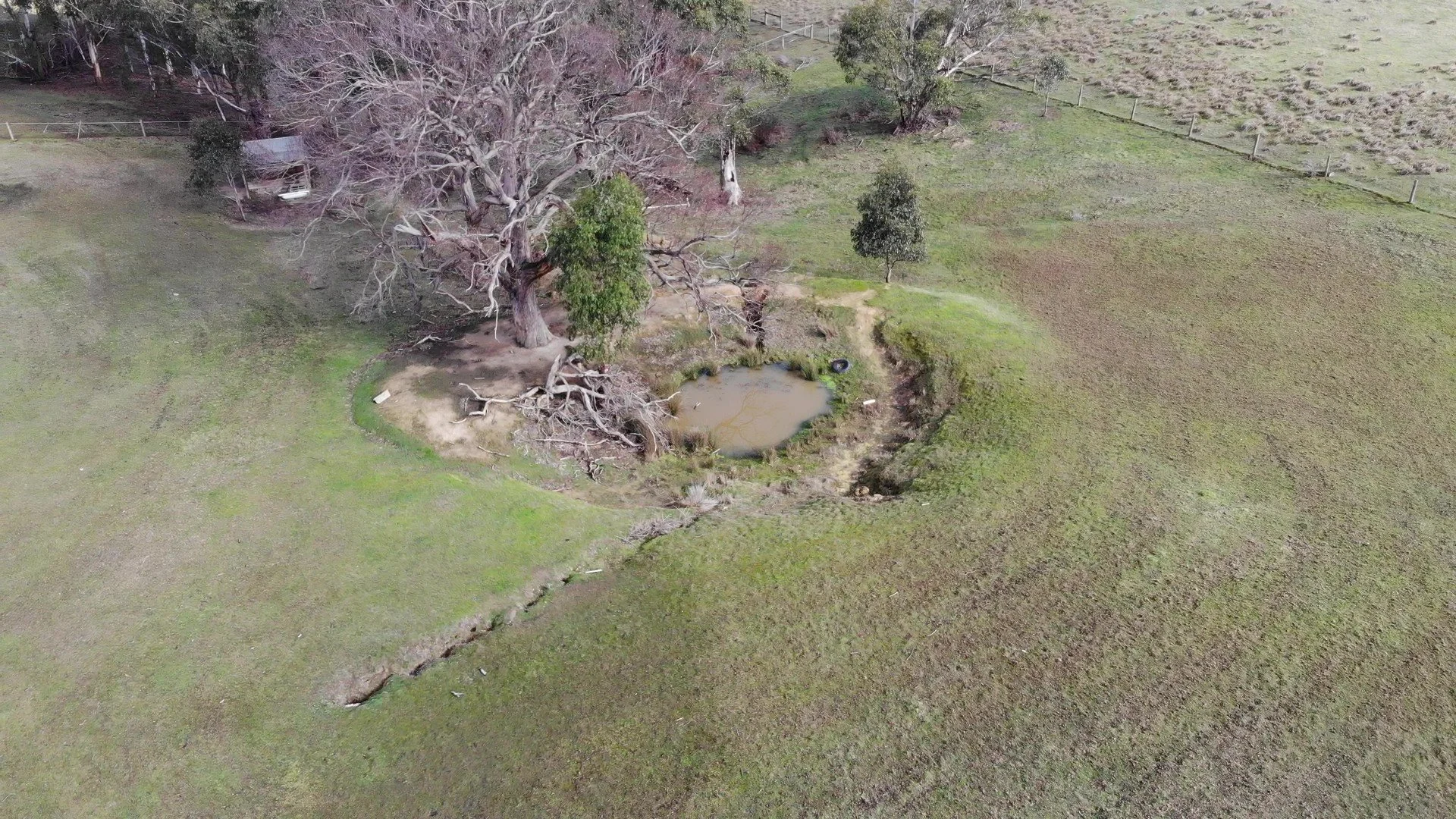
Image by Doug EvansDemonstration biodiverse dams
Status: Under development
Purpose: Establish practical examples of making small farms dams more biodiverse and use them as a focus for community events to demonstrate what can be done and how to do it
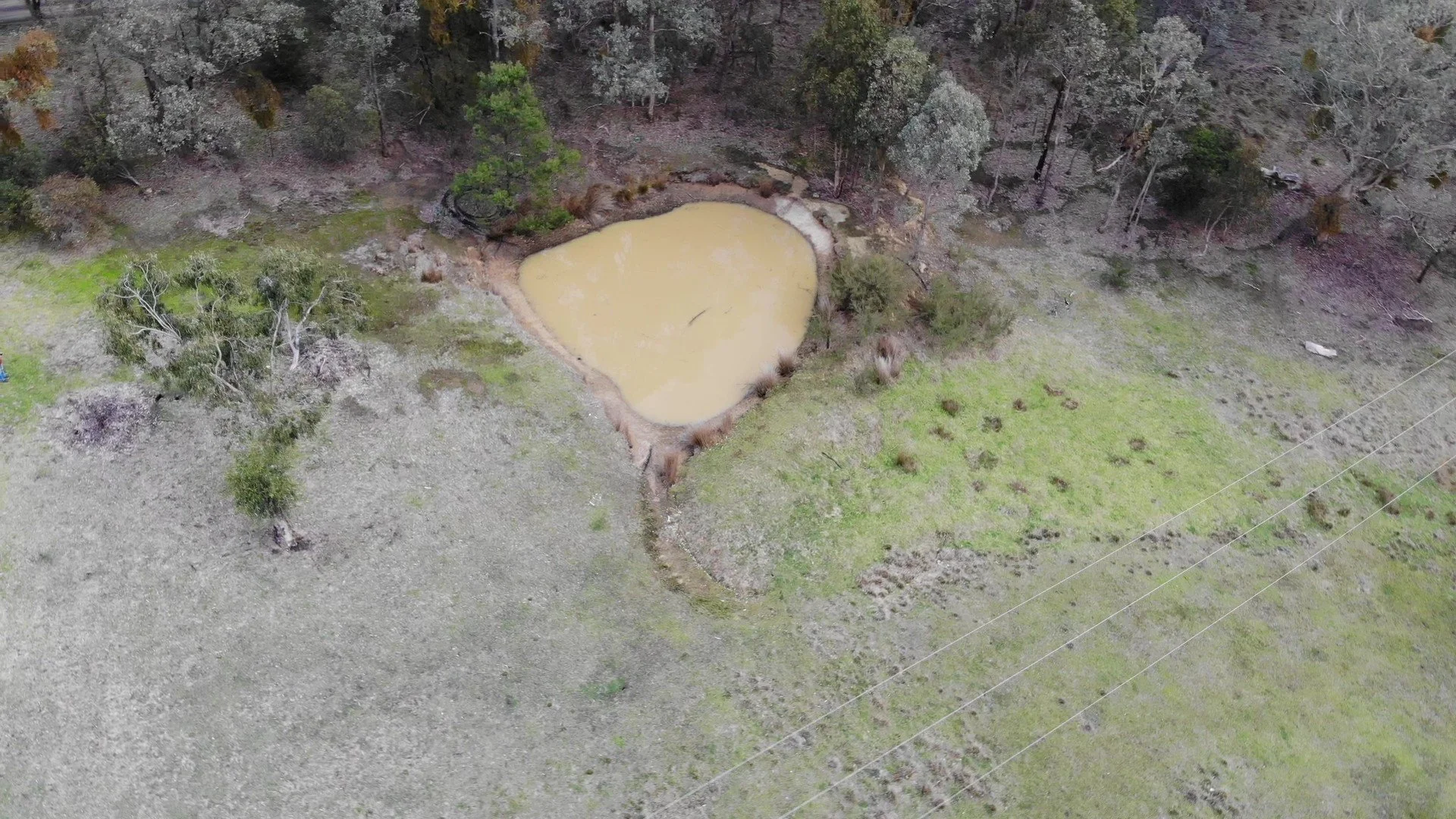
Aim: Partner with Melbourne Water to modify two existing dams to support more wetland plant diversity, improve terrestrial habitat surrounding each dam and use fencing to protect from large herbivores. Once established run community learning events to showcase and explain the why and the how.
Timing: 2025 -
What we did:
Held ongoing discussions with Melbourne Water to clarify what they would be prepared to fund
Two properties were selected – one that has stock (in this case horses) and require access to water from the dam, and one that doesn’t have stock.
Each landholder received a Melbourne Water grant for plants and guards, some contractor planting, and fencing.
The landholders covered some costs ineligible for MW funding including rabbit warren fumigation and earthworks.
Christmas Hills Landcare Group also covered some costs ineligible for MW funding including earthworks, electric fence energisers and materials for floating wetlands, and successfully applied for a separate grant to cover the balance of contractor planting costs.
The exclusion fence is considered an innovative electric fence design that appears to have been successfully used to exclude deer overseas (it won’t exclude large marsupial herbivores or rabbits)
Rabbit warrens were fumigated on one property and earthworks and fencing were completed on both properties using contractor
Jute matting and a mix of native grass seed were used to protect bare soil on both properties as a pair of Landcare events
A floating wetland was constructed for each property, and wetland plant species were planted into both the floating wetlands and the dams themselves by Landcare volunteers
Terrestrial plants have been ordered for planting in autumn 2026
Dam 1 - property with stock (horses)
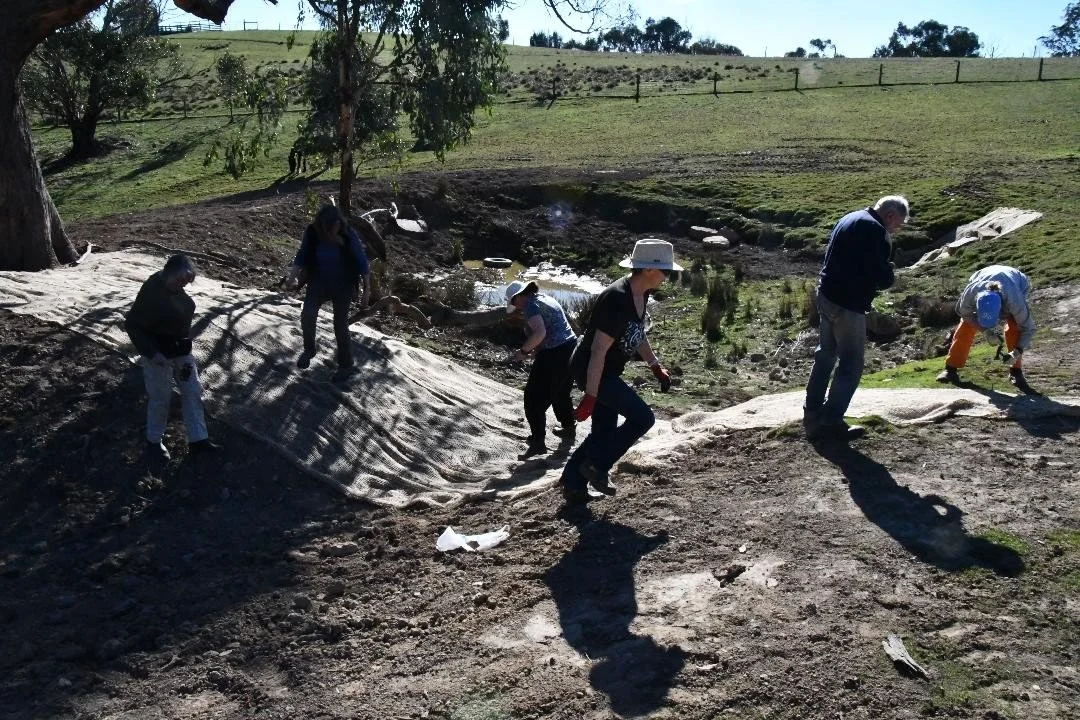
Laying jute matting to protect bare soil
Dam 2 - property with no stock
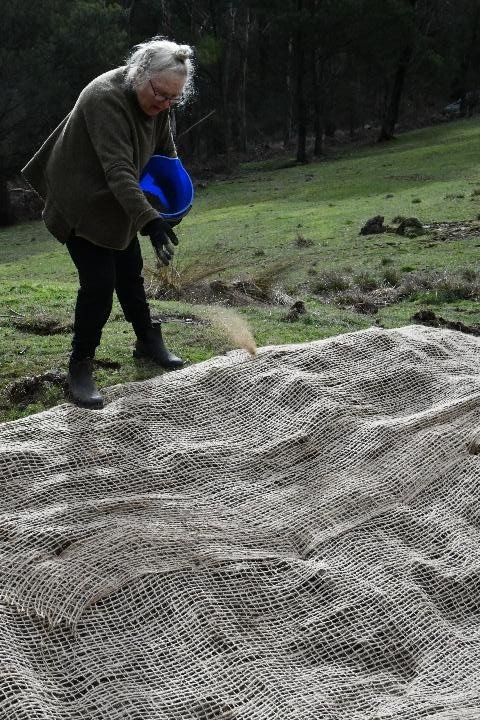
Direct seeding with native grass seed mix
Wyenondabool project (Right-way Fire)
Status: Ongoing
Purpose: Reintroduce traditional burning practices to the care of remnant vegetation in Christmas Hills
Aim: Partner with Wurundjeri to restore their capacity for traditional burning and demonstrate the practice and outcomes of traditional burning in Christmas Hills
Timing: 2017 -
What we did:
Became unsatisfied with other forms of burning we had tried as a land management method
Funding was secured to help bring renowned fire practitioner, Victor Steffensen down from northern Australia
With Uncle Dave Wandin and Victor Steffensen looked at several properties in Christmas Hills and heard indigenous perspectives on the use and benefits of traditional burning
Six sites with potential to establish as demonstration sites for applying and monitoring traditional burning practices were visited
Four sites on three private properties were selected as sites to demonstrate traditional burning practices, and funding was secured to engage the Wurundjeri Narrap Team to conduct burns.
Held a community event “Return of the Wurundjeri Firestick” at a member’s property with Uncle Dave Wandin and Victor Steffensen to share some of what we heard, and gauge local interest in traditional burning.
Over 50 people attended and even engaged in application of fire to the grassy understorey
Herbivore exclusion plots (50m x 25m) were installed within each demonstration burn site
A prototype burn plan that reflected traditional burning concepts and requirements was prepared, along with a monitoring plan incorporating photopoints, vegetation quadrats and invertebrate sampling
Two members of the Narrap Team were also supported to undertake pre-burn monitoring on all four sites
Adopted the term ‘Wyenondabool’ which is a Woi wurrung term that means ‘hills of fire’
Each year we monitor for the signs that indicate that Country is ready to be burnt safely (sufficient moisture in the soil and sufficient drying of the leaf litter and grass thatch), and if ready we attempt to apply traditional burning practices to one or more of the four demonstrations sites
Results
Windows of suitable conditions for traditional burning have proved to be rare and brief
To date burns have been conducted in 2018 (1 site), 2019 (4 sites), 2022 (3 sites), 2023 (1 site), 2024 (2 sites), 2025 (2 sites) and 2026 (2 sites)
In most cases the area of leaf litter and vegetation burnt was very small (<100m2), however the burns in 2024 (330m2), 2025 (1300m2) and 2026 (625m2)were more successful in terms of area burnt
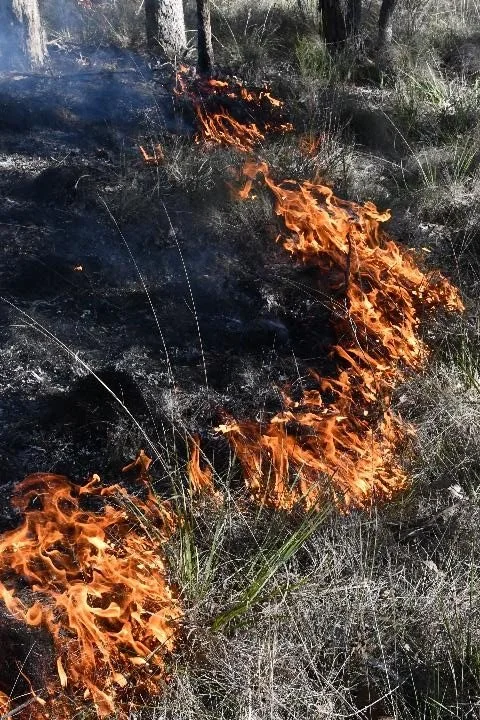
2025 burn at a demonstration burn site
Photopoint time series at one demonstration burn site
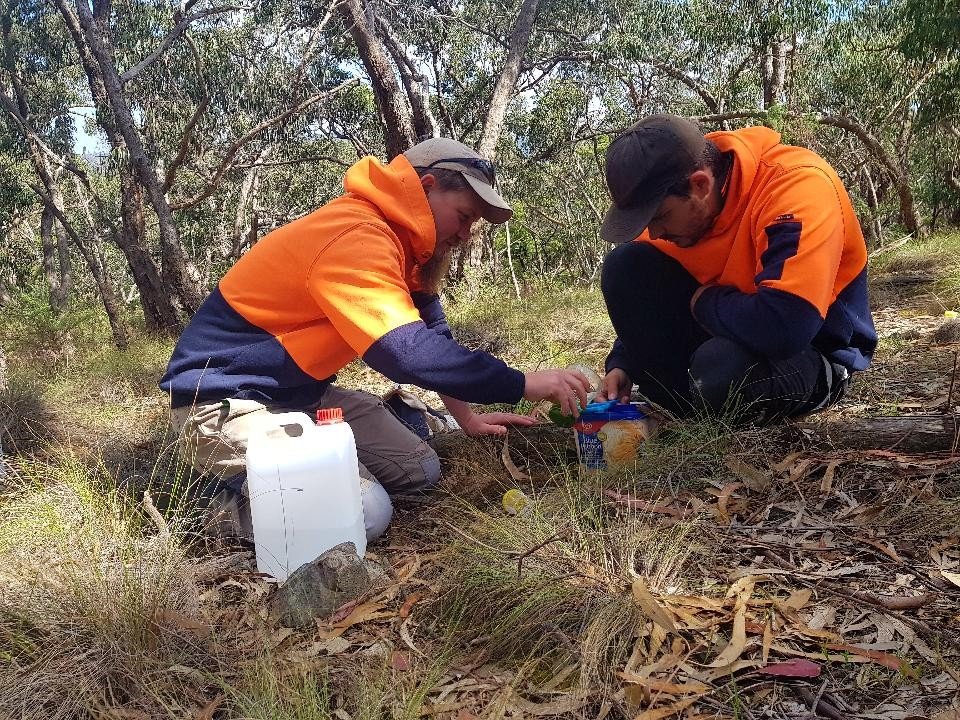
Invertebrate sampling with Wurundjeri Narrap Team members
Woody weeds control program
Status: Ongoing
Purpose: Reduce the habitat-altering impact of woody weeds where they occur within native vegetation on private property in Christmas Hills
Aim: Provide specialist contractor services to treat woody weed infestations on private properties in Christmas Hills
Timing: 2012 -
What we did:
Sought expressions of interest from Christmas Hills landholders in having a contractor engaged by the Landcare group treat woody weeds on their property
Asked the specialist contractor to provide a quote based on the returned EoIs
Used the quote as the basis for a grant application
If successful, the Landcare group engages the contractor who then contacts each landholder to make arrangements for undertaking the works
Target species include Blackberry, Boneseed, Sweet Pittosporum, Cootamundra Wattle, Sallow Wattle, Late Black Wattle and Radiata Pine
This process of seeking EoIs to inform a grant application has been repeated in some form every year
In many cases not all woody weeds on a property can be treated with the funds available, so repeat visits are arranged if more funds have been secured
Results
In 2012, two grants totaling just over $29,000 were secured that enabled the treatment of woody weeds on 23 properties
As at the end of 2025, over $237,000 of grant funding has been secured to treat woody weeds in 842 hectares of native vegetation on 70 properties
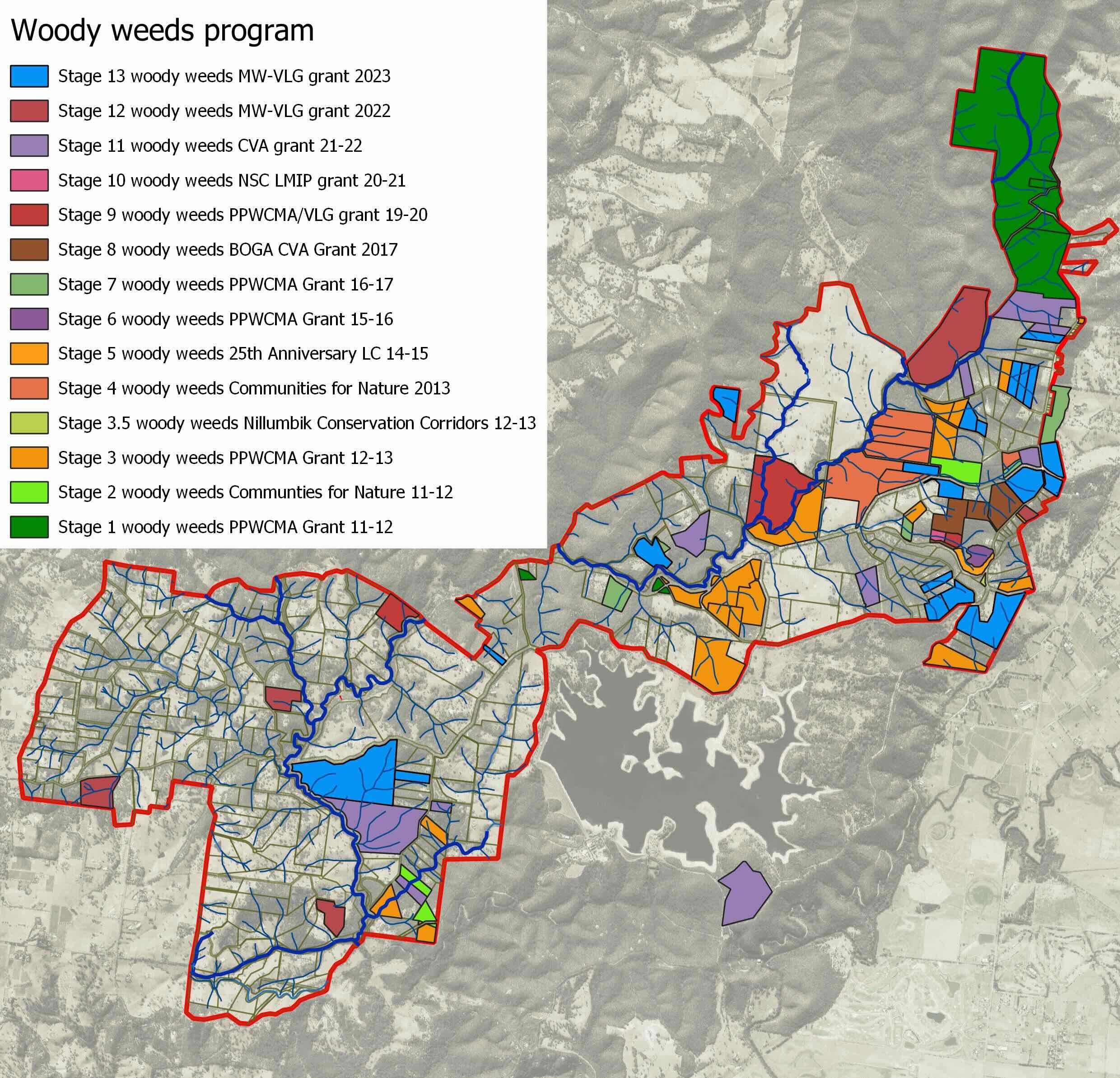
Map showing properties that have participated in the woody weeds program
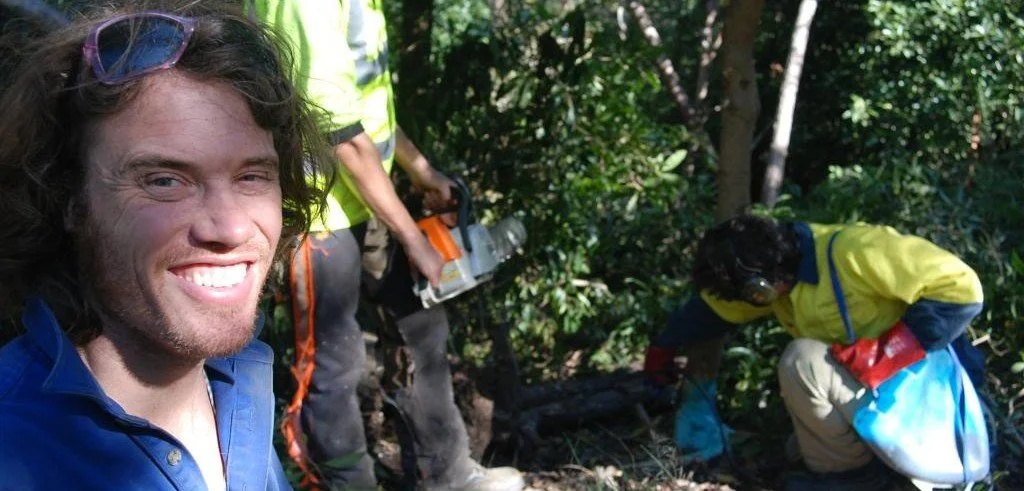
Happy landholder
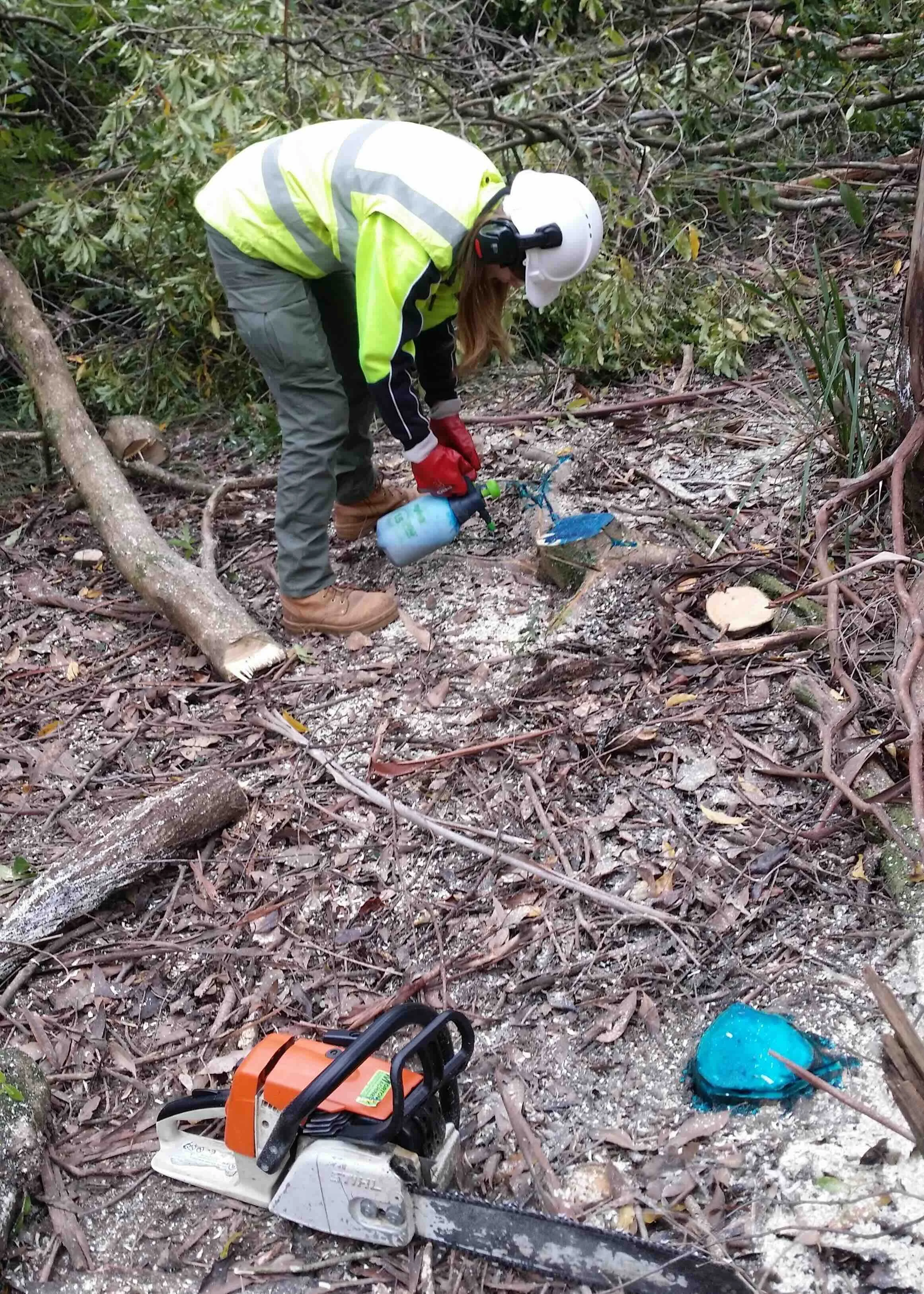
Contractor treating large Sweet Pittosporum
Community fauna monitoring program
Status: Ongoing
Purpose: Reveal to Landcare members some of the fauna that occur on their property and in the wider Christmas Hills
Aim: Provide motion-sensing infrared cameras to landholders to set up on their property to record fauna using their property
Timing: 2011 -
What we did:
Sought expressions of interest from Christmas Hills Landcare Group members for using a camera to detect fauna on their property
Initially purchased 6 Scoutguard cameras, and materials for making bait stations (for scent lures) to attract fauna to the front of the camera
A set of instructions on how to set up the camera and scent lure were produced and made available to landholders when they received a camera and bait station
Further call outs for interest in using a camera were made to members and more cameras purchased over the years
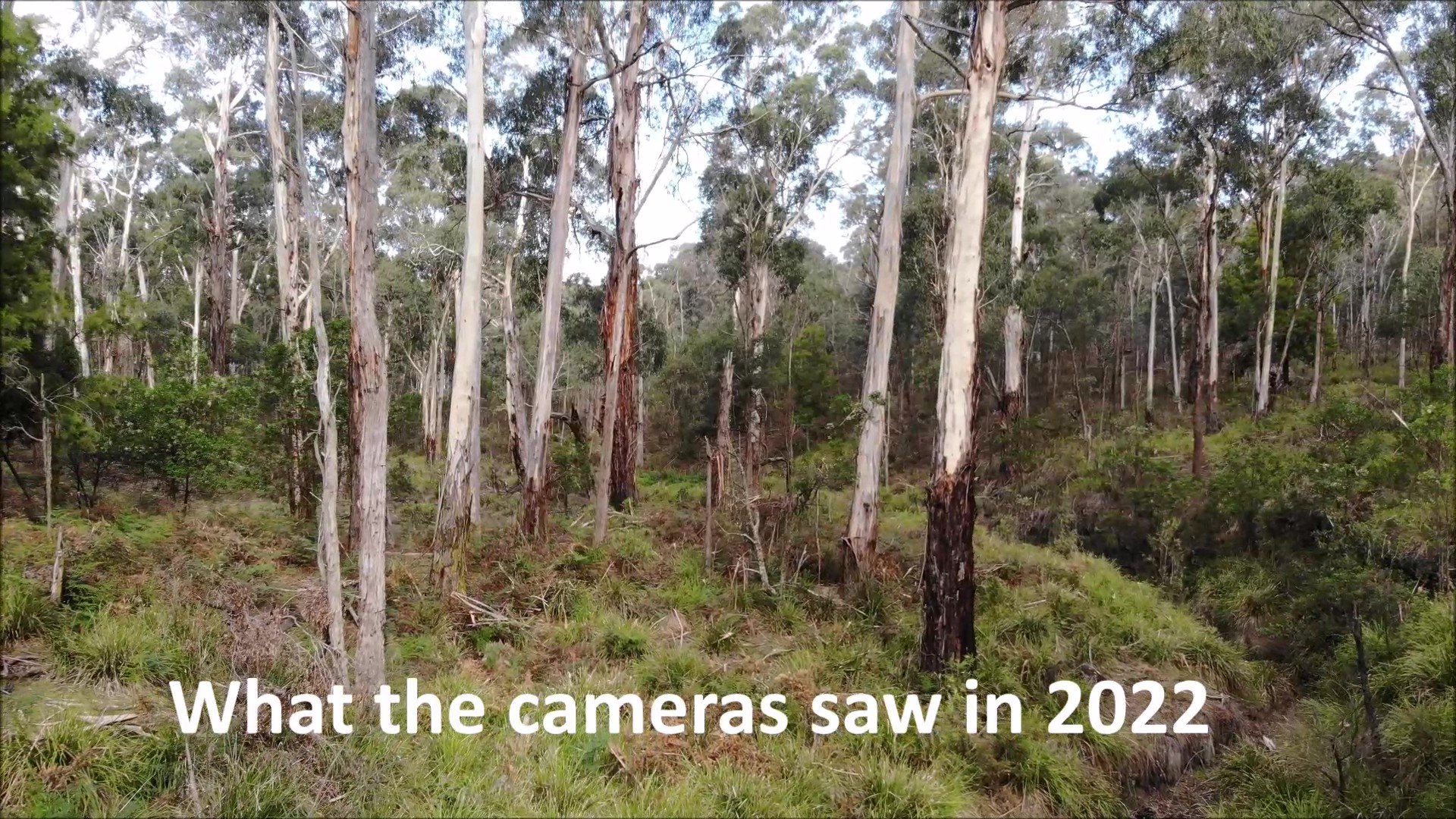
Presentations summarising what the cameras saw during the year were prepared each year
Results
In 2011, 18 landholders used the first batch of cameras on their properties
6 native mammal species, 8 native bird species and 5 introduced mammal species were recorded as still images
In subsequent years, more and better-quality cameras were purchased, more landholders participated, and we switched from taking still images to recording short videos
Several Landcare members volunteered as local camera coordinators to help move the cameras between participating properties and collect the recorded images
“What the cameras saw in <year>” has become a popular and anticipated presentation at the last Landcare event for each calendar year
As at the end of 2025, a total of 103 different vertebrate species have been recorded as an image or video. 23 mammals (9 introduced), 71 birds (1 introduced), 7 reptiles and 2 amphibians
Nest boxes for special species
Status: Complete
Purpose: Enhance the breeding opportunities for important local hollow-dependent fauna
Aim: Install nest boxes on private properties for Slender-tailed Dunnart, Brush-tailed Phascogale, Eastern Pygmy Possum and Powerful Owl
Timing: 2011-2017
What we did:
Sought expressions of interest from Christmas Hills Landcare Group members for the supply and installation of nest boxes
Slender-tailed Dunnart.
In 2011 50 custom-built dunnart nest boxes made from marine-ply, and same number of concrete pavers were purchased and installed as pairs of box and paver on the ground on 20 properties
Brush-tailed Phascogale
In 2012 65 nest boxes made from cypress pine were constructed by a disability support centre, and were installed on 20 private properties
In 2013 Trust for Nature supplied and installed 20 nest boxes made by Latrobe Uni Wildlife Reserves on 5 covenanted properties
In 2017 VicRoads provided 25 nest boxes made from cypress pine and constructed by volunteers at Yarra Glen Men's Shed, and installed on 10 properties
Eastern Pygmy Possum.
In 2016 63 boxes made from cypress pine were constructed by the Yarra Glen Men's Shed and installed on 21 properties
In 2017 VicRoads provided 25 nest boxes made from cypress pine and constructed by volunteers at Yarra Glen Men's Shed, and installed on 8 properties
Powerful Owl
In 2016 2 nest boxes fashioned from a large hollow by four Landcare members had cameras fitted to the inside of each box, and installed by a professional tree-climber on 2 properties
Between 2020 and 2023 two Landcare members were engaged to find and inspect as many as possible of the 250 nest boxes
Results
Slender-tailed Dunnart boxes – 17 boxes not found, 1 mammal found in one box, probably a Dunart, but not confirmed
Brush-tailed Phascogale boxes - 13 boxes not found, 20 occupied by bees, 23 occupied by a mammal – Sugar Glider reliably identified in 18 boxes, Brush-tailed Phascogale reliably identified in 1 box
Eastern Pygmy Possum boxes – 12 boxes not found, none occupied by a mammal (although separate to this survey, a Lesser Long-eared Bat was observed in 1 box in 2018)
Powerful Owl boxes – none occupied by a Powerful Owl. The camera has stopped working in one, and the tree the other was in fell. This box has been re-installed I another tree, but perhaps wrongfully, a dead tree. Its camera has been bumped and now points straight out the entrance.
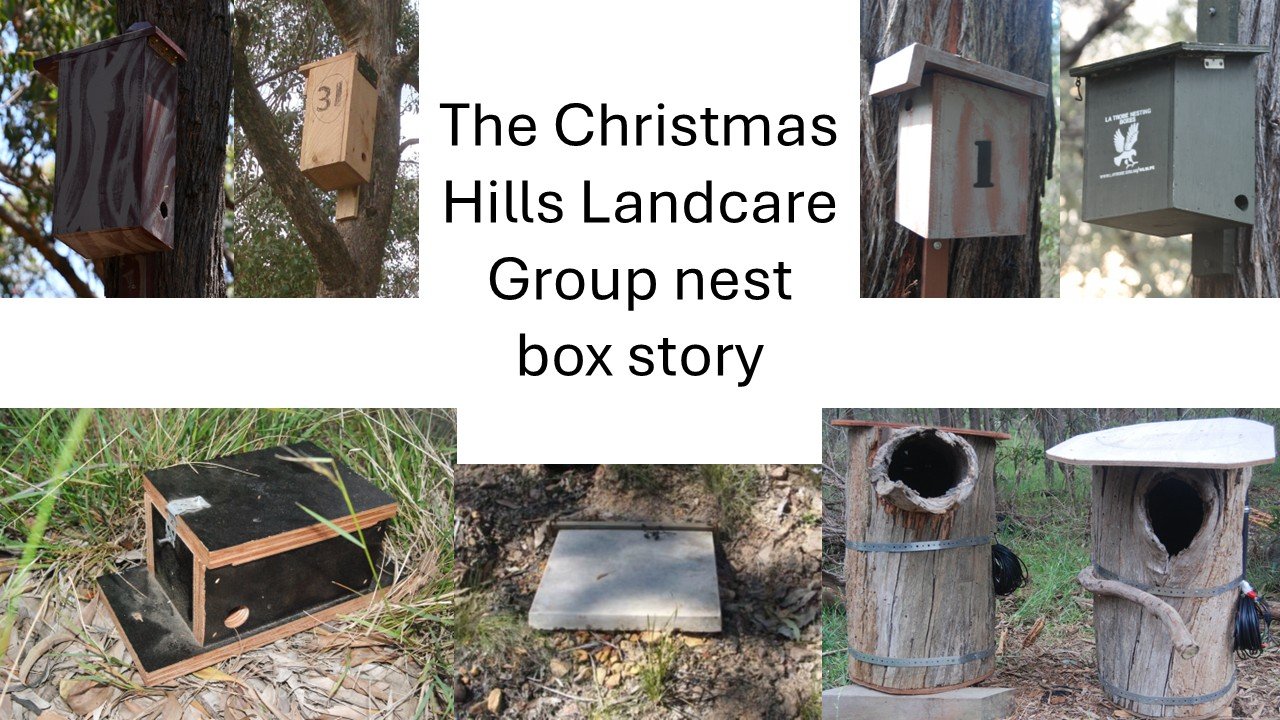
The results of the nest box survey were presented to Landcare members at a community event in 2024
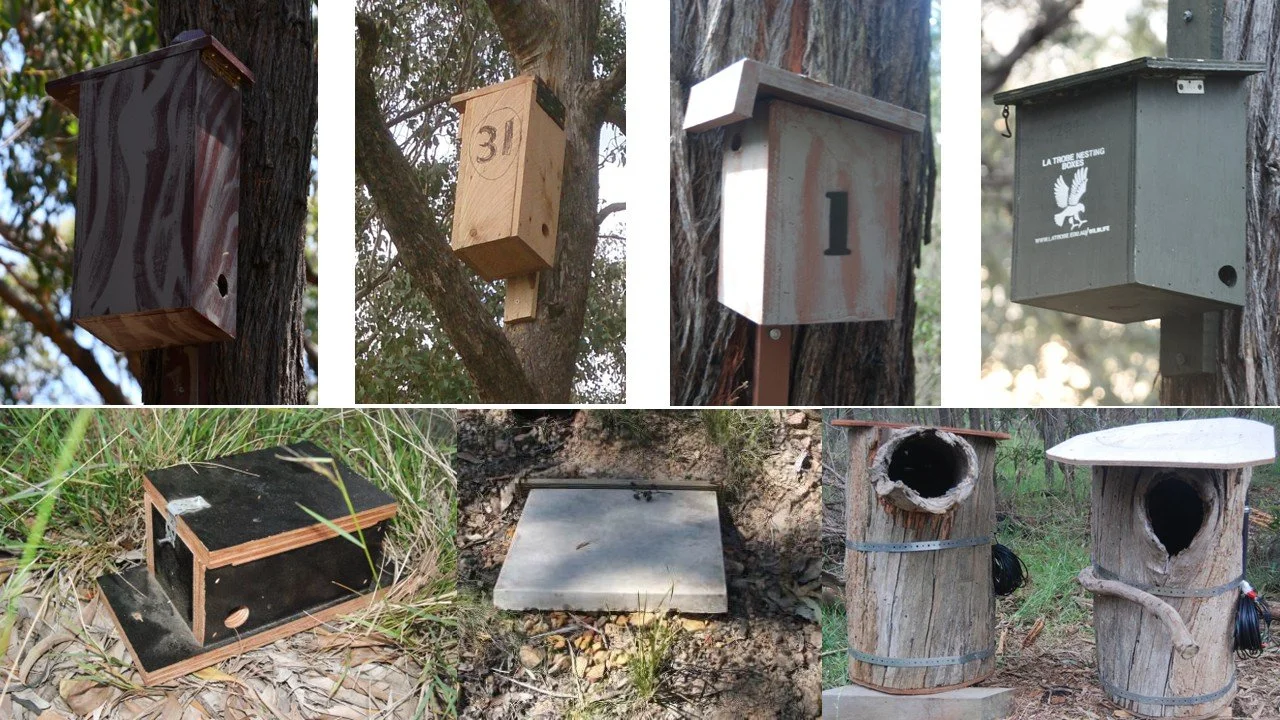
Top row (L to R) - Phascogale; Phascogale: Pygmy possum; Phascogale
Bottom row (L to R) - Dunnart; Dunnart; Powerful Owl
2024 presentation
Fox trapping program
Status: Complete
Purpose: Reduce the impact of fox predation on a range of ground-dwelling animals that occur in Christmas Hills, and gain insights into their local diet
Aim: To undertake a program of soft-jaw trapping of foxes, and analyse the stomach contents of foxes caught
Timing: 2015-2016
What we did:
Mailout to all Christmas Hills Landcare Group members seeking interest and permission for contractor to access property and set traps
Engaged professional fox trapper did two rounds of setting and checking soft-jaw traps on participating properties
Fox trapper removed, labelled and froze the stomachs from all foxes (and cats) caught
Landcare volunteers removed, washed, dried, labelled and bagged the contents of each stomach
The stomach content were sent to Barbara Triggs for identification of mammalian hair and bones
Results
24 properties participated
Round 1 ran from 28th July 2015 to 25th August 2015 when foxes are pairing off and preparing to establish dens.
138 soft-jaw leg-hold traps were set and checked daily over two trapping pulses for a total of 987 trap nights.
Round 2 ran from 14th December 2015 to 13th January 2016 when young foxes are dispersing from the dens to establish their own territories.
126 soft-jaw leg-hold traps were set and checked daily over two trapping pulses on the 24 properties for a total of 635 trap nights
Round 1 saw a total of 9 foxes and 2 cats trapped, with 1 cat sent to the pound
Round 2 saw a total of 38 foxes and 1 cat trapped.
On Sunday, 13th September 2015 29 people participated in the washing and drying of the stomach contents from animals caught during Round 1, as well as those from another 6 foxes shot on a nearby property, 2 roadkill specimens, and one found dead on a private property. The dried contents were not photographed before being sent for analysis.
On Sunday, 17th January 2016 9 people participated in the washing and drying of the stomach contents from animals caught during Round 2, as well as those from another 10 foxes trapped nearby for Parks Victoria. The dried contents were photographed before being sent for analysis
Barbara Triggs identified mammal hairs found in the stomach contents and reported her findings back to us
Hairs from seven different native mammals, and seven different introduced mammal were recorded
Most notable finding was the hair of an Eastern Pygmy Possum found in the stomach of a fox trapped on Skyline Road
A stomach contents analysis report was prepared
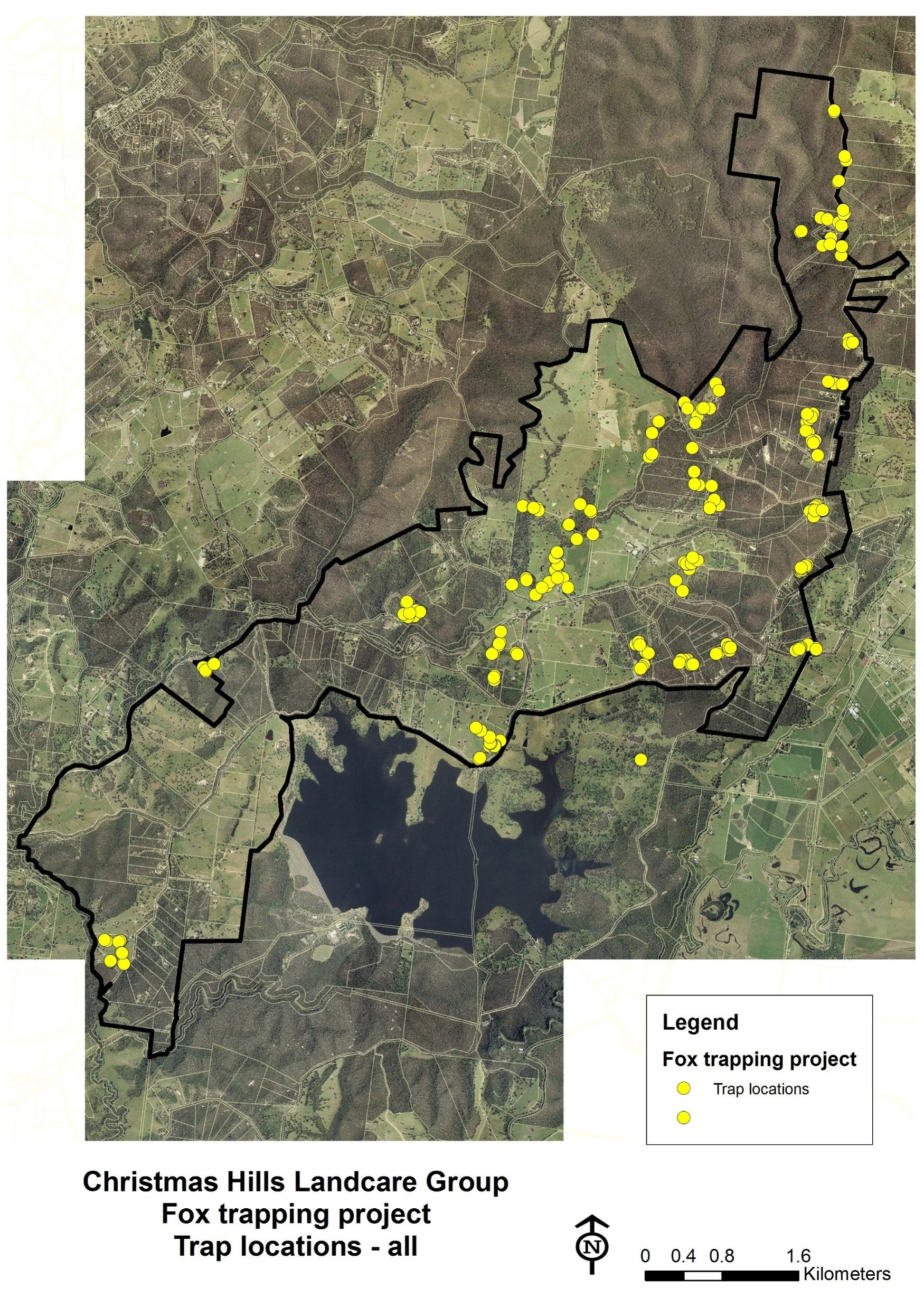
Map showing all trap locations
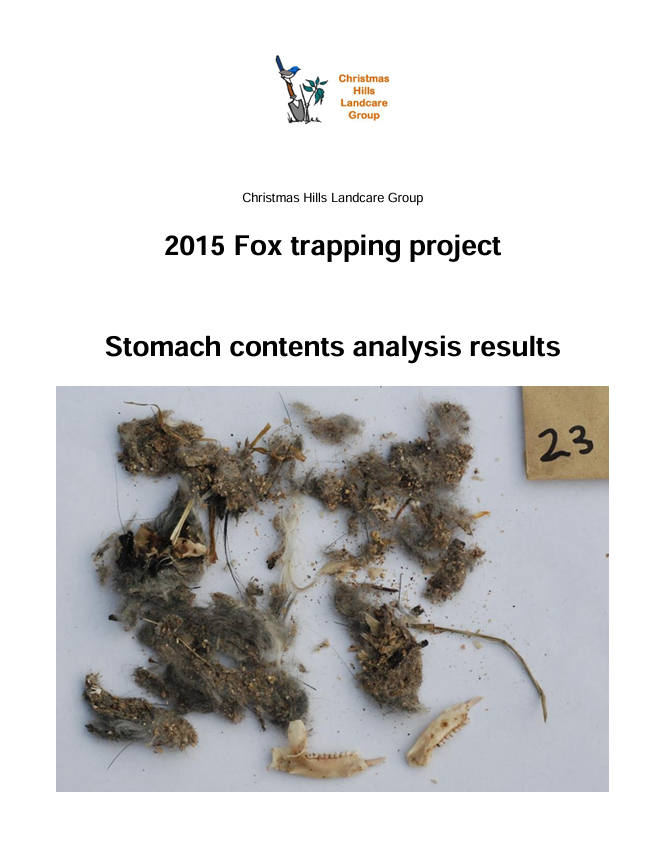
Stomach contents analysis report
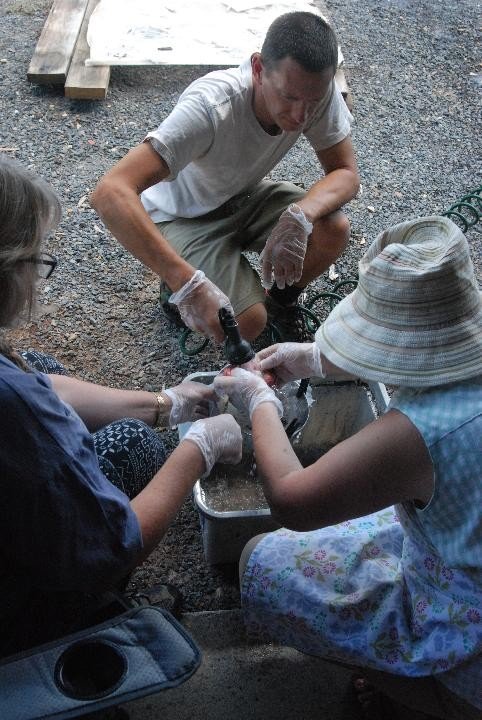
Washing fox stomach contents
Rare Orchid Search
Status: Complete
Purpose: Find populations of rare orchid species on private properties
Aim: To search for target orchid species in areas of suitable habitat at times to coincide with flowering
Timing: 2014
What we did:
Mailout to all Christmas Hills Landcare Group members seeking interest and permission for an orchid expert to search their property for the target species
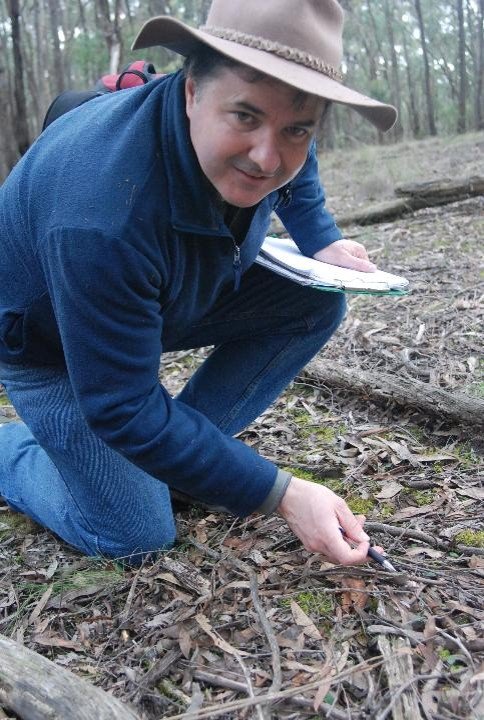
Engaged an orchid expert (Dr Dean Rouse) to search for orchids on properties who granted permission, and record all orchid species encountered whilst doing so
Results
28 properties participated, and four public sites were also included
Searching was conducted over three separate periods during 2014 (June, August/September, and October)
11 rare species of orchid were targeted in the searching
Two of the target species were detected
54 species of orchid were recorded overall during the project
A project report was prepared that included the orchids observed on each property, site management recommendations, and sites considered suitable for potential reintroduction of four threatened orchid species
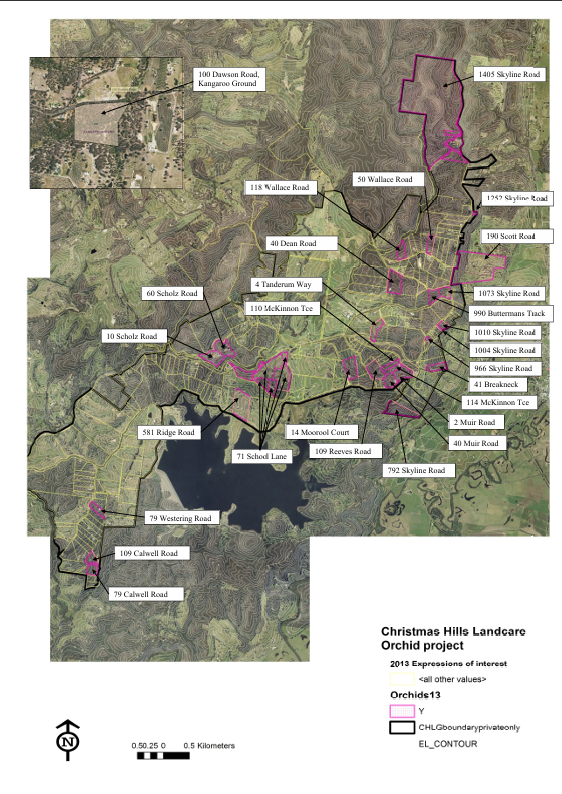
Map showing search locations
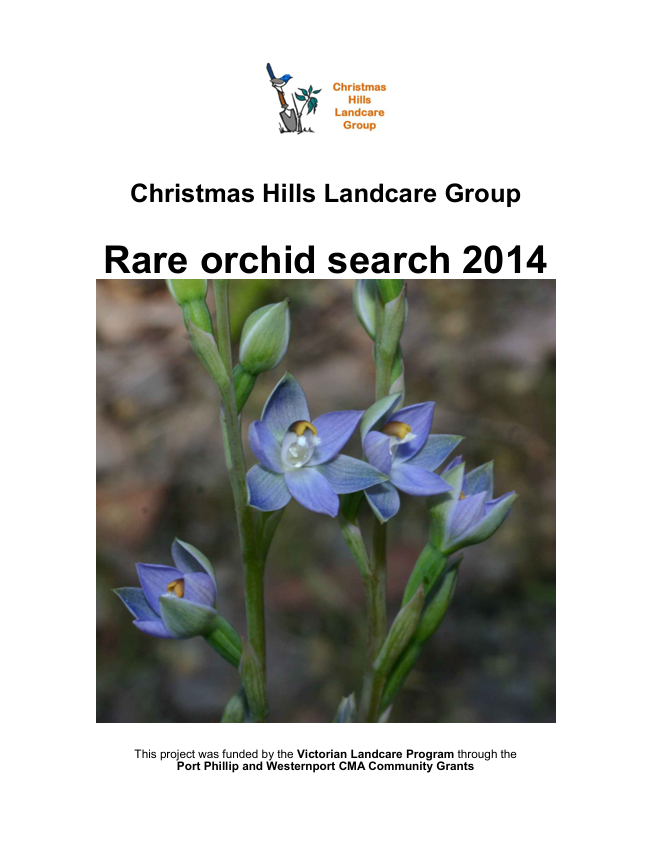
Rare orchid search project report
Dr Dean Rouse
Targeted rabbit control program
Status: Complete
Purpose: Strategic landscape-scale program of rabbit control to reduce their impact on the natural environment
Aim: To engage landholders within a targeted priority area to undertake a program of ferreting, baiting, harbour removal and warren collapsing on their properties
Timing: 2008-2011
What we did:
Mailout to all Christmas Hills landholders explaining project and seeking permission to access property for mapping purposes
Engaged a 3rd year Deakin student to undertake mapping of rabbit warrens and selected weed species on the property where permission was granted
Mapping results used to identify target area for rabbit control program
Mailout to properties within target area to establish interest and permission for contractor work
Volunteers cut and assembled bait stations
Pre-treatment spotlight count of rabbits along transect routes
On properties where permission was granted:
Contractors were engaged to spray blackberry
A volunteer ferreter caught and removed rabbits
One or more bait stations and pindone oats were provided
A contractor was engaged to collapse warrens using an excavator
Held a field day to demonstrate ferreting, use of the bait station, and warren collapsing
Results
61 properties covering 698 hectares were mapped for warrens and 10 weed species
An area of 560 hectares was selected for the targeted rabbit control program
32 properties covering 358 hectares agreed to participate
A spotlight count of rabbits along 10km of transect routes returned an estimate of 63 rabbits/km2 (+ < 6,000 rabbits in the target area)
Specialist contractor sprayed blackberries on 25 properties covering 291 hectares
80 bait stations were cut and assembled from steel mesh and distributed to 20 landholders
130 rabbits were removed by the ferreter
111 warrens were collapsed using the excavator
27 people attended the field day, that included rabbit on the lunch menu
Unfortunately a follow-up spotlight count was not undertaken
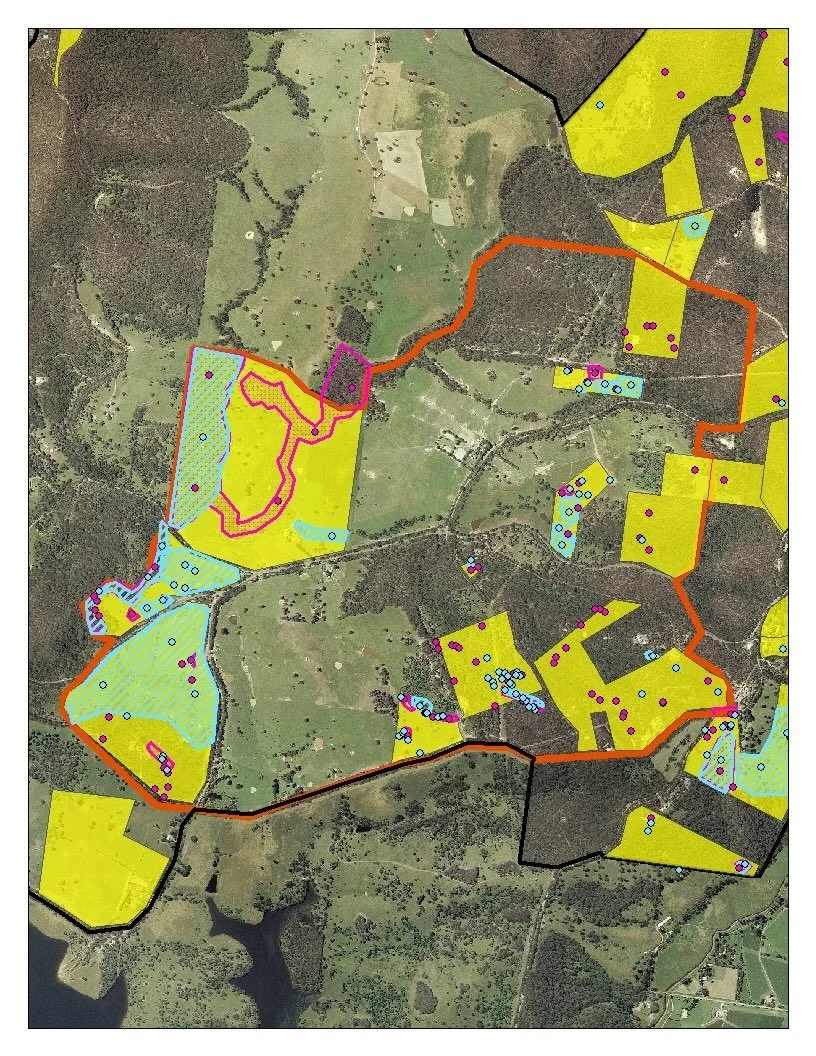
Map showing program target area and mapped warrens and blackberry
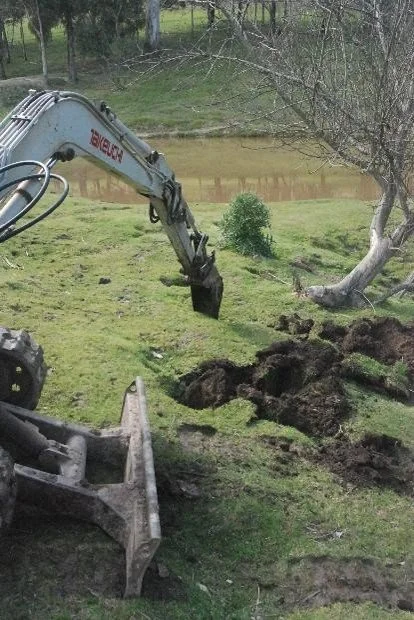
Contractor collapsing warrens
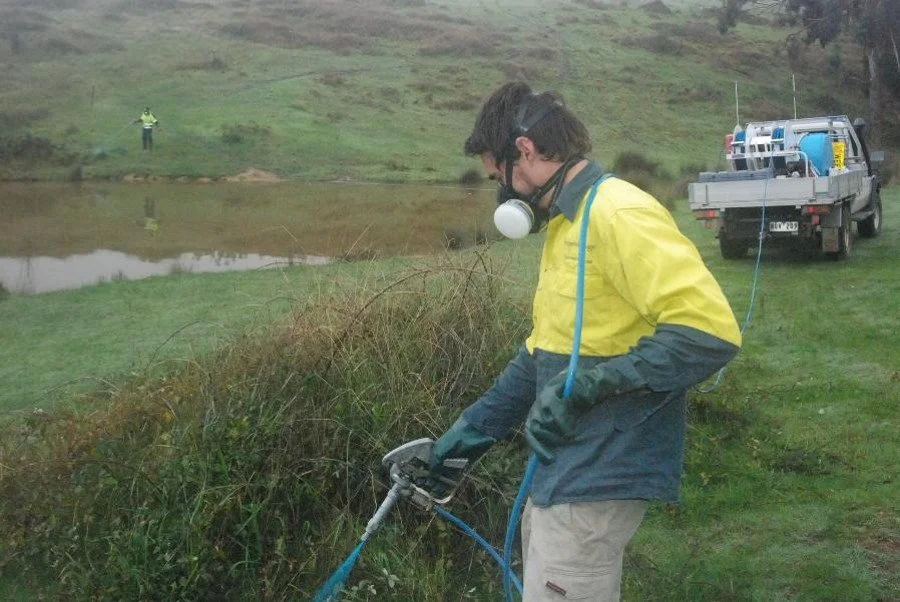
Contractor spraying blackberry
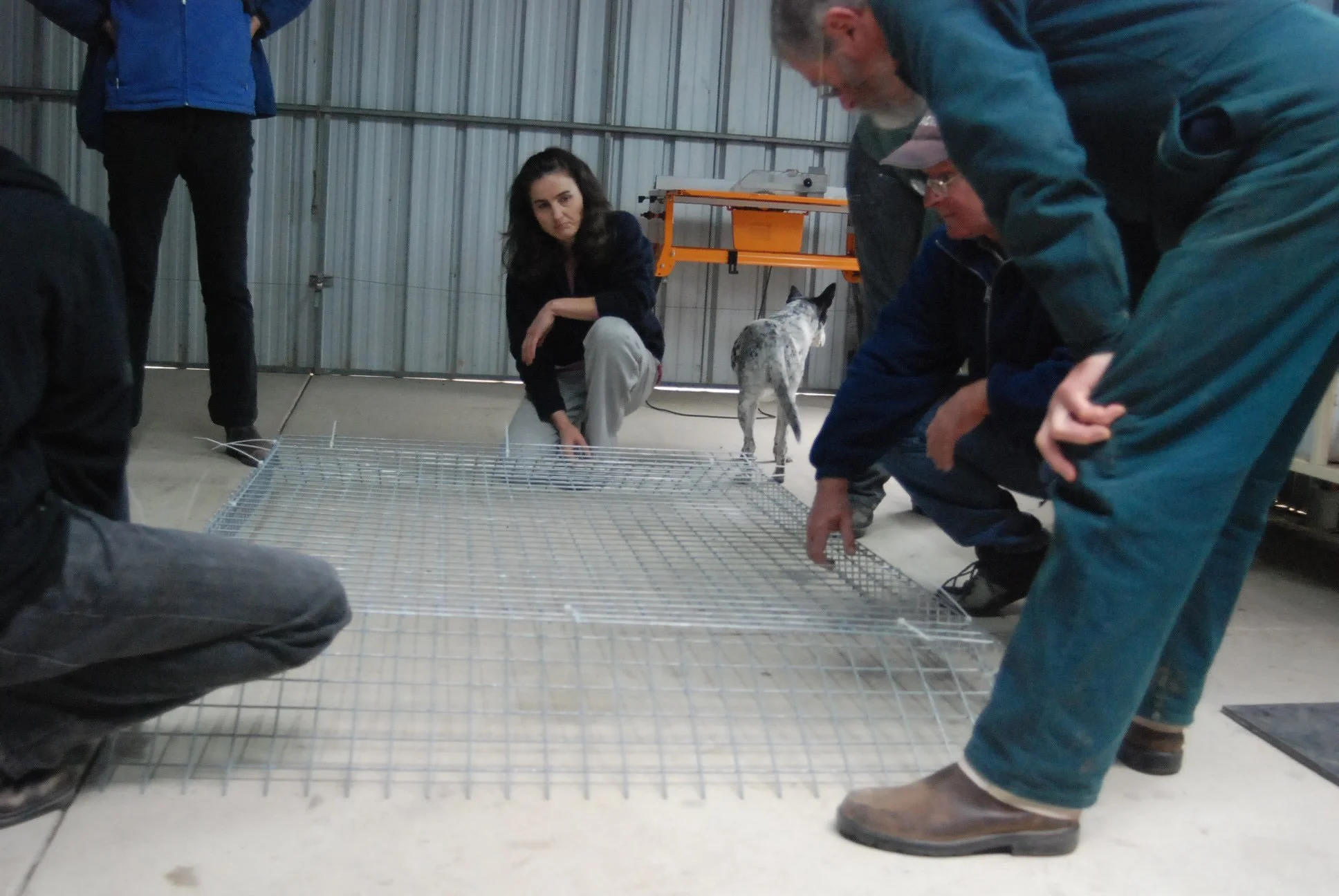
Volunteers constructing bait station
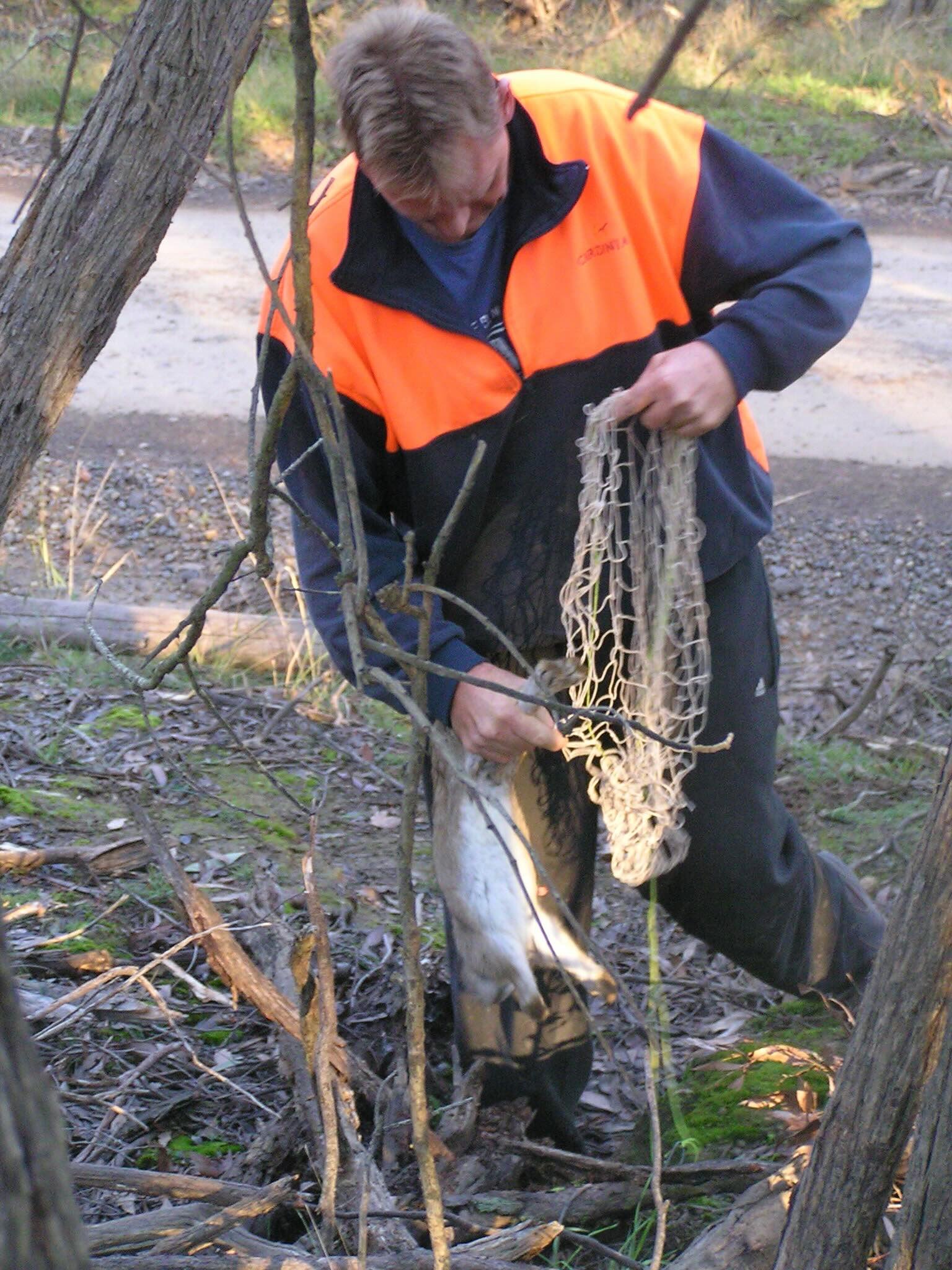
Ferreter removing rabbits